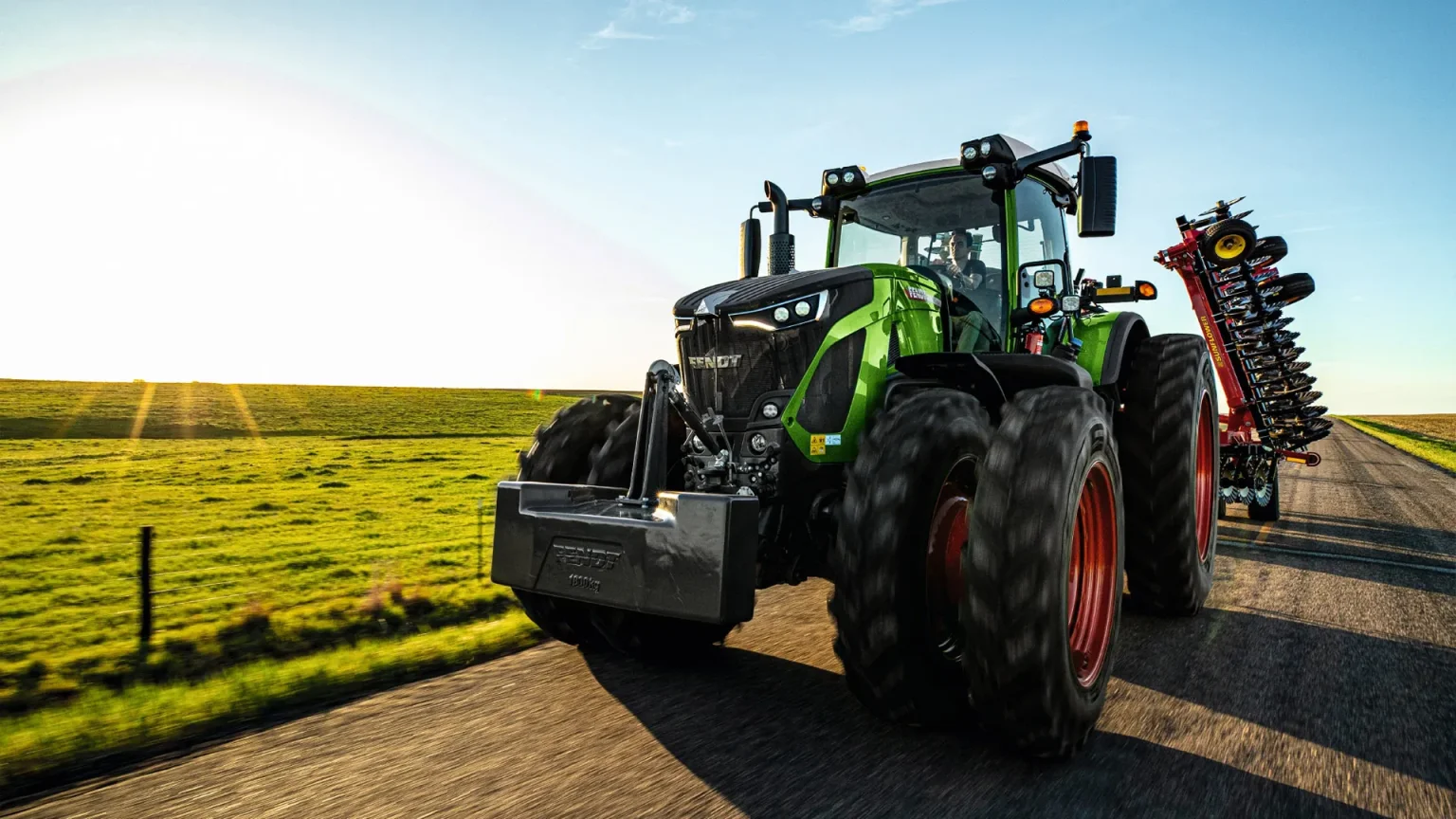

As per Market Research Future analysis, the Tractor Market Size was estimated at 76.35 USD Billion in 2024. The Tractor industry is projected to grow from 79.79 USD Billion in 2025 to 123.93 USD Billion by 2035, exhibiting a compound annual growth rate (CAGR) of 4% during the forecast period 2025 – 2035.
Market Overview
The tractor is a powerful engineering vehicle specifically designed to deliver high torque at slow speeds, making it indispensable for a vast range of agricultural, construction, and industrial tasks. In the agricultural context, tractors serve as the primary source of mechanical power for pulling, pushing, and powering various implements such as plows, harrows, planters, harvesters, and sprayers. Modern tractors have evolved far beyond simple draft animals; they are now sophisticated mobile workstations featuring advanced electronics, telematics, GPS guidance systems, and power take-off (PTO) shafts to drive stationary machinery. The tractor market encompasses a wide spectrum of machines, from compact utility tractors for small farms and landscaping to massive four-wheel-drive (4WD) articulated tractors for large-scale row-crop farming. Beyond agriculture, tractors are also utilized in construction (backhoe loaders), forestry, and municipal maintenance, though agricultural applications dominate the market.
Several fundamental growth drivers are propelling the global tractor market forward. Foremost among these is the escalating global demand for food, driven by a rising world population and changing dietary patterns toward more protein-intensive foods. This demand necessitates significant improvements in agricultural productivity and efficiency, directly fueling the need for mechanization, with tractors at the forefront. Government subsidies and support programs in developing nations—such as India, China, and various African countries—that promote farm mechanization are powerful catalysts. These initiatives make tractors more affordable for small and medium-scale farmers. Furthermore, the acute shortage of agricultural labor in many regions, exacerbated by rural-to-urban migration, is compelling farmers to invest in mechanical solutions like tractors to ensure timely planting and harvesting operations. In developed markets, the trend toward large-scale, consolidated farming operations drives demand for high-horsepower, technologically advanced tractors.
Key industry trends include the rapid adoption of precision agriculture technologies. Tractors are increasingly equipped with GPS auto-steering, variable rate technology (VRT), yield mapping, and telematics systems that allow fleet management and remote diagnostics. Another prominent trend is the shift towards higher horsepower models, especially in the Americas and Europe, as farms consolidate to achieve economies of scale. The growing popularity of compact and utility tractors for mixed-use applications (small farms, orchards, vineyards, and even municipal snow removal) represents a significant and stable demand segment.
Technological developments are transforming tractors from simple power sources into data-centric agricultural hubs. The integration of ISOBUS (a communication protocol) allows seamless connectivity between tractors and any compliant implement, regardless of manufacturer. Developments in continuously variable transmissions (CVTs) offer improved fuel efficiency and operator ease. Autonomous and semi-autonomous tractor technology is advancing rapidly, with several manufacturers field-testing driverless tractors that can operate around the clock, addressing labor shortages with unprecedented precision. Electric and hybrid-electric tractor prototypes are also emerging, particularly for light-duty and specialty applications, responding to sustainability pressures and the need to reduce emissions in enclosed environments like barns or greenhouses.
Policy and regulatory influence plays a substantial role. Emission regulations, particularly Stage V in Europe and Tier 4 Final in North America, mandate the use of advanced diesel engines with complex after-treatment systems (DPF, SCR, EGR), significantly impacting tractor design and cost. Conversely, government farm mechanization subsidies in nations like India and various African countries directly lower the purchase barrier for tractors. Safety regulations regarding roll-over protection structures (ROPS) have also become standard, saving lives but adding to manufacturing complexity and cost.
The demand outlook for the tractor market remains positive, albeit with regional variations. The Asia-Pacific region, led by India and China, will continue to be the largest volume market, driven by the ongoing mechanization of smallholder farms. The mature markets of North America and Europe will see growth driven by replacement demand and the adoption of high-tech, high-horsepower models for large-scale farming. The aftermarket for tractor parts, including engines, transmissions, tires, and hydraulic systems, also presents a substantial and consistent revenue stream.
📍 Get Free Sample Report for Detailed Market Insights:
https://www.marketresearchfuture.com/sample_request/12025
Market Segmentation
By Type
The tractor market is segmented by power output and design configuration. By power output, categories include <40 HP (Horsepower), 40-100 HP, and >100 HP. The <40 HP segment, often comprising compact and sub-compact tractors, is highly popular in Asia-Pacific and for specialty agriculture like orchards and vineyards. The 40-100 HP segment represents the backbone of medium-scale farming globally, offering versatility for a wide array of operations. The >100 HP segment is the fastest-growing in dollar terms, driven by large-scale row-crop farming in the Americas and Europe, demanding high efficiency and the ability to pull large implements. By design, the market includes 2-wheel drive (2WD) and 4-wheel drive (4WD) tractors, with 4WD models gaining share due to better traction, reduced soil compaction, and higher resale value, especially in wet or hilly terrains.
By Application
Primary applications are segmented into Agriculture, Construction & Mining, and Industrial. Agriculture is the dominant segment by far, covering all arable farming, horticulture, and livestock operations. Within agriculture, sub-applications include tillage (plowing, harrowing), sowing & planting, weeding & inter-cultivation, spraying, and harvesting (when equipped with appropriate headers). The construction and mining segment uses specialized tractor variants, primarily backhoe loaders and wheeled dozers. The industrial segment includes tractors used in material handling, airports (tugs), and municipal services (snowplows, mowers). The agricultural application continues to drive most innovation and volume.
By Drive Type
This segmentation includes 2-Wheel Drive (2WD) and 4-Wheel Drive (4WD) / All-Wheel Drive (AWD) tractors. 2WD tractors are typically lighter, more fuel-efficient on flat, dry terrain, and are more affordable, making them popular in developing markets and for light-duty applications. 4WD/AWD tractors offer superior traction, stability, and pulling power, especially in adverse soil conditions, on slopes, or when pulling heavy loads. The 4WD segment, including articulated frame 4WD tractors for very high horsepower, is gaining market share globally as farms consolidate and farming operations expand into less ideal terrains. Front-wheel assist (FWA) is a popular variant of 4WD in utility tractors, engaging automatically when slip is detected.
By End User
The market is divided between Original Equipment Manufacturers (OEMs) and the Aftermarket. The OEM segment represents the sale of new tractors from manufacturers to dealers and directly to large farming operations. This segment is sensitive to agricultural commodity prices, interest rates, and government policies. The aftermarket segment includes replacement parts (engines, transmissions, hydraulic pumps, tires), attachments (loaders, backhoes, mowers), and maintenance services. The aftermarket is highly stable and profitable, with a direct correlation to the global tractor parc (number of tractors in use) and average fleet age.
By Region
Geographically, the market is analyzed across North America, Europe, Asia-Pacific, and the Rest of the World (including Latin America, the Middle East, and Africa). This analysis reveals distinct demand patterns based on farm structure, economic development, mechanization levels, and regulatory environments. Asia-Pacific dominates in unit volume, while North America and Europe dominate in high-value, technologically advanced tractor sales.
🛒 You can buy this market report at:
https://www.marketresearchfuture.com/checkout?currency=one_user-USD&report_id=12025
Regional Analysis
North America
North America, particularly the United States and Canada, is a mature, high-technology tractor market characterized by large-scale, consolidated farming operations. Demand is heavily skewed towards high-horsepower (>100 HP), 4WD, and tracked tractors for row crops like corn, soybeans, and wheat. Precision agriculture adoption is near-universal in this segment. Compact and utility tractors (<100 HP) are also in steady demand for livestock operations, haymaking, and rural property maintenance. The replacement cycle is a primary driver, along with demand for autonomous-ready machinery. Key manufacturers have a strong local presence.
Europe
Europe presents a diverse market. Western Europe (Germany, France, UK) features large farms demanding high-horsepower, technologically sophisticated tractors that comply with stringent Stage V emission norms. There is strong emphasis on fuel efficiency, telematics, and connectivity. Eastern Europe (Poland, Romania, Ukraine) is a growth frontier, with rapid farm consolidation and increasing mechanization driving demand for both new and used tractors, primarily in the 100-200 HP range. Specialty tractors for vineyards and orchards are a notable segment in Mediterranean countries. The aftermarket for remanufactured components is robust due to high new-equipment costs.
Asia-Pacific
Asia-Pacific is the largest and fastest-growing tractor market in terms of volume, dominated by India and China. In India, the market is heavily influenced by monsoon patterns, government Minimum Support Prices (MSP) for crops, and state-level mechanization subsidies. The dominant segment is 40-100 HP tractors, with 2WD models being the norm. In China, government policies promoting farm consolidation and modernization are driving demand for larger, more powerful tractors. Southeast Asian nations (Thailand, Vietnam, Indonesia) are seeing increasing adoption of tractors for rice and palm oil production. The market is price-sensitive but growing robustly.
Rest of the World
This region includes Latin America (primarily Brazil and Argentina), the Middle East, and Africa. Brazil and Argentina are powerhouse agricultural producers, with demand for very high-horsepower 4WD tractors and combines for soybean, corn, and sugarcane production. This market is technologically sophisticated and closely tied to global commodity prices. Africa presents the next frontier for tractor growth, with significant untapped potential. Initiatives like the UN’s Sustainable Development Goals and various national agricultural transformation agendas are promoting mechanization, though challenges remain in financing, infrastructure, and service support. The Middle East market is smaller, focused on large-scale farms in irrigated valleys and date palm operations, with demand for heavy-duty tractors.
Competitive Landscape / Key Players
The global tractor market is fairly consolidated at the top, with a few multinational corporations commanding significant market share, alongside numerous strong regional and local players. Key global players include Deere & Company (USA), CNH Industrial N.V. (UK/Italy, brands: Case IH, New Holland), AGCO Corporation (USA, brands: Massey Ferguson, Fendt, Valtra), Kubota Corporation (Japan), Mahindra & Mahindra Ltd. (India), and Escorts Kubota Limited (India). Other significant players include SDF Group (Italy, brand: Same Deutz-Fahr), CLAAS KGaA mbH (Germany), and Yanmar Co., Ltd. (Japan). Competition is based on product reliability, dealer network strength, technology integration (precision ag, telematics), financing options, and after-sales service. Key strategies include launching higher-horsepower models, developing autonomous and electric tractor prototypes, forming strategic alliances for technology sharing, and expanding distribution networks in emerging markets.
Latest Industry News & Developments
-
Autonomous Tractor Field Tests: In late 2024, multiple major manufacturers announced expanded field testing programs for fully autonomous tractors, with some aiming for limited commercial availability in select geographies by late 2025. These systems leverage AI, computer vision, and redundant safety systems to operate without an operator in the cab.
-
Electric Compact Tractor Launches: Several companies, including a leading Japanese manufacturer and a European startup, unveiled new all-electric compact tractors for the utility and specialty crop segment in early 2025. These models target emission-sensitive applications like organic farms, vineyards, and livestock barns, featuring swappable battery packs.
-
Supply Chain Localization Initiatives: Following global disruptions, a prominent Indian tractor manufacturer announced a significant expansion of its local component sourcing network, aiming to insulate production from geopolitical supply chain risks while reducing costs and lead times for its domestic and export markets.
Market Challenges & Opportunities
Key Challenges include the high upfront cost of new tractors, which is a major barrier for smallholder farmers in developing nations. The complexity of modern emission-compliant diesel engines and electronic systems increases manufacturing costs and requires specialized, often expensive, maintenance. Seasonal demand patterns tied to agricultural cycles create manufacturing and inventory management challenges. Fluctuations in commodity prices and farm incomes directly impact farmers’ ability to make capital purchases. Additionally, the availability and cost of financing, especially in developing regions, remains a significant constraint.
Emerging Opportunities are substantial. The development of cost-effective, smaller-horsepower tractors tailored for emerging markets remains a huge opportunity. The growing demand for autonomous and electric tractors represents a multi-billion dollar future market, with first-mover advantages. Telematics and data-driven services, including predictive maintenance, fleet optimization, and precision ag integration, offer recurring revenue models beyond the initial tractor sale. The aftermarket for certified refurbished tractors and remanufactured components is expanding, offering a more affordable entry point for mechanization.
Future Market Potential
The long-term potential of the tractor market is strongly positive. Tractors will remain the central pillar of global food production. The future will see a bifurcation: highly sophisticated, data-driven, autonomous-ready, and increasingly electric or hybrid machines for large-scale commercial farming, and simpler, more affordable, but still reliable machines for smallholders. The integration of tractors into digital agricultural ecosystems—where they communicate with implements, sensors, and farm management software—will be the defining trend of the next decade, cementing the tractor’s role as a mobile data hub rather than just a source of draught power.
To explore more market insights, visit us at:
https://www.marketresearchfuture.com/reports/tractor-market-12025
Final Market Summary
In summary, the global tractor market is poised for steady, reliable growth, projected to increase from USD 79.79 billion in 2025 to USD 123.93 billion by 2035 at a 4% CAGR. This growth is fundamentally anchored by the inexorable need to feed a growing global population through improved agricultural productivity. While the Asia-Pacific region will continue to drive volume growth through the mechanization of small farms, the North American and European markets will lead in technological innovation, particularly in autonomy, precision agriculture, and alternative powertrains. The industry faces challenges in affordability, regulatory compliance, and cyclical demand, but the opportunities presented by digitalization, automation, and the push for sustainable farming are immense. The tractor, as a machine, is not only enduring but is being reinvented for the next era of smart, efficient, and connected agriculture.
Explore additional reports to understand evolving market landscapes: